ART IS LIFE
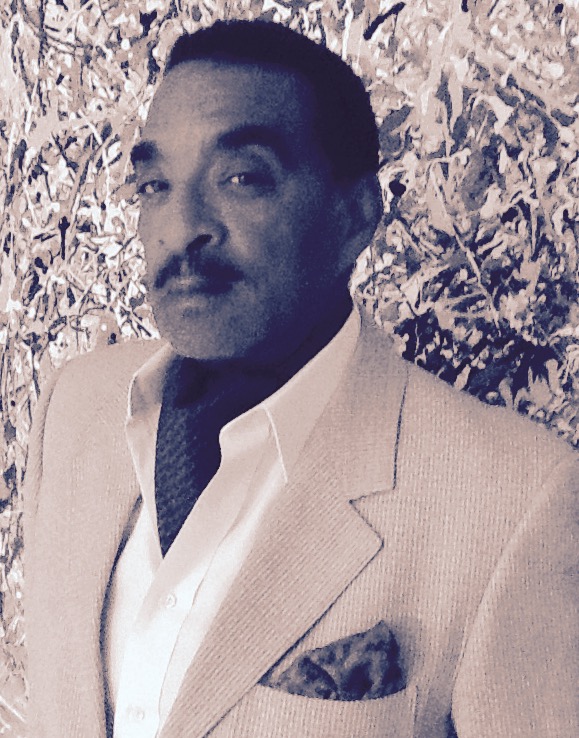
James e. Woody is one of the world’s first proclaimed and recognized African American Abstract trans-personal Expressionist Artist.
Based in Charlotte, North Carolina, his background, artistic philosophy, and career highlight several key areas.
James Edward Woody (frequently known simply as “Woody”) is an American self-taught visionary painter, concept developer, and philanthropist. Recognized as one of the early self-proclaimed African American trans-personal Abstract Expressionist artists, his creative work spans over several decades, though much of it remained private for a long time.
The Philosophy of “trans-personal Art”
Woody’s work is deeply anchored in the belief that “art is life and life is sacred.” He describes his paintings as a symbolic reenactment of his abstract imagination and a timeless, internal universe.
• The Goal: His style blends elements of the Expressionist, Futurist, Dada, and Action Art movements. He uses the canvas as a meditative ritual meant to trigger higher states of consciousness, deeper forms of cognition, and inner wisdom for the viewer.
• Themes: His paintings often use rich, organic movement and acrylics to explore the balance between memory, emotion, and human endurance. Common titles of his pieces include Angel of Light, Delight in the Moment, and Slipping Away.
A Multifaceted Background
Before focusing heavily on his creative and spiritual art, Woody lived a highly varied public life, primarily centered in New York City during his formative adult years:
• Corporate & Tech Career: In the mid-1970s, he worked in direct response advertising and psychographic research for McGraw-Hill. By the 1980s and 90s, he transitioned into corporate communications, net-eccentric systems, and early e-commerce adaptation, consulting for massive entities like American Express, Simon & Schuster, and CBS Sports Online.
• Fashion & Modeling: Alongside his business acumen, Woody worked internationally as a fashion model, participating in press kits and runway shows for legacy designers such as Giorgio Armani, Yves Saint Laurent, and Gianni Versace, to name a few..
Philanthropy and Advocacy
Woody heavily integrates his art with social impact. He co-founded the Be Sensitive Foundation (associated with his Be Sensitive Studio), a private philanthropic initiative. The foundation works to support young social innovators, young entrepreneurs, and gifted children, while promoting sustainable models, impact investing, and artificial intelligence for social good.
He protects his physical and digital originals with blockchain-backed certificates of authenticity (Verisart), and a portion of his art print proceeds typically flows back into his philanthropic initiatives.
Woody is a distinctive talent with a creative vision and a point of reference.
Scholars view Woody’s paintings as derivatives of the Expressionist, Futurist, DaDas, and the Action Art Movement. In brief, Woody’s “transpersonal works” depict new forms of cognition and depths of feeling; a catalyst for helping others discover their empowered inner wisdom, the single most powerful and lasting seed of change.
Additionally, trans-personal art reflects the multiplicity of our reality. Moreover, it expresses the realm of our primary meaning, a universal consciousness. Thus, this consciousness envisions life as sacred. Additionally, these images may seem mystical, literal, or conceptual. Additionally, abstract elements vary as representations of the known, the less known, and the unknown. Whether you view trans-personal art as a mirror of biology, or as contact with other worlds. Additionally, they are our collective dreams and visions. These are the dramatic personae of your imagination, realized as entities with a life of their own. James e. Woody, © 1988.
A Blue-chip artist of the 21st century
Woody’s paintings are owned by art luminaries, visionaries and champions of philanthropy.” (Partial list)
It’s long been a maxim that has defined the philosophical relationship between a collector and their art. This motivation to acquire or commission great works of art has taken many forms since the advent of the Renaissance patronage. For the royal courts, it was power and prestige; for the aristocracy, recreation, and pleasure; for the great industrialists, cultural refinement; and for the avant-garde, social stratification.
Woody’s paintings are not just pictures:
Woody paintings are derivatives of the abstract expressionist and action art movements, expressive events with their power derived from creating paintings. Woody’s” paintings are reflections of our new realities and will continue to trend because they are fundamentally focused on self-realization and design psychology, tools used to create inspiring places. Visit Woody’s Online Gallery.
James Woody actively promotes the embedded principles of social impact investments.
“Woody” collaborates with visionary philanthropists, rendering his talents to various social innovative projects. Learn More